Dust You Cannot See, Fire You Cannot Afford: Combustible Dust Control in Blast Rooms
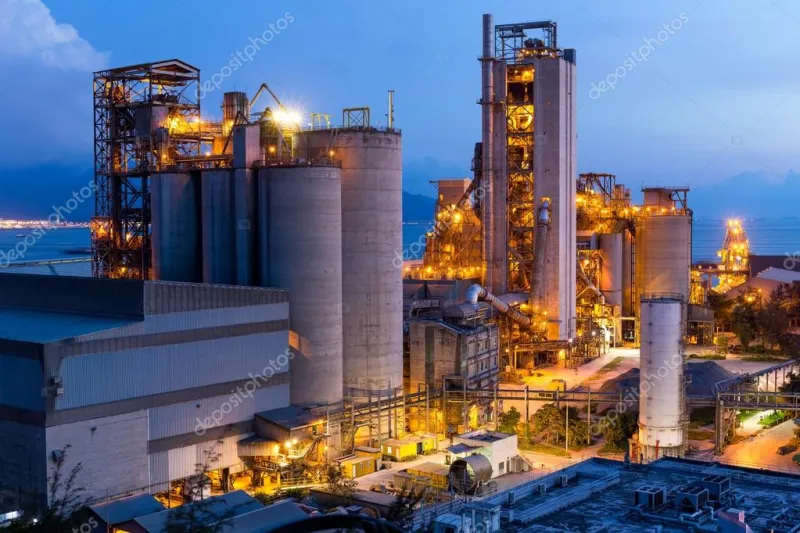
Photo: industrial blast room dust extraction enclosure workshop, via st2.depositphotos.com
Ask a blasting contractor what the hazard in a blast room is and the answer will usually be noise, silica or hand-arm vibration. Fire rarely makes the list. Yet a sealed enclosure filled with finely divided coating debris, served by compressed air and lit by whatever happened to be available, is a space in which a small mistake can escalate with unusual speed.
The fuel is normally the coating, not the abrasive
Blast media are often assumed to be inert across the board. Garnet, chilled iron, aluminium oxide and glass bead do not readily burn, and for most ferrous work that assumption holds well enough. But the pot does not only see media. It sees paint, and paint is where the energy is stored: epoxy, polyurethane, zinc-rich primers, intumescent coatings and the accumulated grime of decades of service. Reduced to a fine powder by the blast stream and by the handling of spent material, those coatings form a dust that will burn — and at the right concentration will do considerably more than burn.
Some media are combustible in their own right. Plastic media, walnut shell, corn cob and other organic abrasives bring a fuel load of their own into the room, and their presence should change the risk assessment rather than sit outside it.
Why confinement changes the calculation
Outdoors, a dust cloud disperses and the ignition risk falls away with it. Inside a blast room, a sheeting-clad temporary hall, a container cell or a sealed scaffold tent, dispersal does not happen. The fine fraction stays airborne for long periods and settles on beams, ledges, ductwork, light fittings, cable trays and the floor.
That settled layer is the real hazard. Most serious dust explosions in industry are two-stage events: a small primary release, often no more than a flash, disturbs layers that have built up over months, and the resulting cloud ignites. In a blast room the disturbance could be a door swinging shut, an extract fan starting, or a compressed air lance used to shift a stubborn pile. Layer depth thresholds are a useful planning tool rather than a precise science, but a visible, continuous layer on horizontal surfaces is well past the point at which housekeeping should have intervened.
What DSEAR expects of the operator
The Dangerous Substances and Explosive Atmospheres Regulations 2002 place clear duties on anyone handling a dangerous substance. Translated into day-to-day blast room practice, they call for a written risk assessment that identifies the dust concerned and its combustion characteristics; measures to prevent, or where that is not reasonably practicable, control the formation of explosive atmospheres; classification of any hazardous areas and selection of equipment accordingly; identification and exclusion of ignition sources; and mitigation of the effects of any explosion.
Two practical consequences follow. First, the room's electrical equipment, lighting, fans and any portable apparatus used inside it must be appropriate to the zone in which they sit — a domestic inspection lamp on an extension reel is not. Second, the assessment must be reviewed when something changes: a new coating type, a switch to plastic media, an increase in throughput, a new extraction configuration.
Housekeeping treated as an engineering control
Cleaning in a blast room is not a tidying exercise; it is the principal means by which the fuel load is kept below the point at which a secondary event becomes credible. That means a defined regime rather than an occasional sweep: mid-shift removal of accumulations around the working area, end-of-shift cleaning of ledges and surfaces, and emptying of hoppers before they overflow rather than after.
How the cleaning is done matters as much as how often. Dry sweeping lifts fines back into the air. Compressed air blowdown creates precisely the cloud that the regime exists to prevent and should be prohibited inside the enclosure. An appropriately rated vacuum — one suitable for combustible dust and for the area classification — is the default tool, with wet methods used where the substrate and the waste route allow. Collected material should be bagged at the point of collection and removed promptly, not left in an open drum beside the door.
Ignition sources that are routinely missed
- Hot work. Grinding, cutting and welding generate both sparks and hot surfaces. A written permit, a cleared area, and a watched fire point are the minimum.
- Static. Non-conductive ducting, un bonded equipment and dry pneumatic conveying all accumulate charge. Bonding and earthing of plant, ductwork and vessels should be verifiable rather than assumed.
- Electrical equipment. Heaters, chargers, extension leads, portable lighting and the office fridge plugged in beside the door all deserve a second look against the area classification.
- Vehicles and plant. Forklifts and telehandlers entering the room introduce hot surfaces and exhaust, and their classification matters.
- Metal-on-metal impact. Metallic abrasives striking steel at speed produce sparks as a matter of course; the control is the fuel load, not the sparks.
Extraction: proven, not presumed
An extraction system that is running is not the same as one that is working. Airflow should be confirmed by measurement at defined intervals, filter condition monitored by differential pressure, and ductwork inspected internally for accumulation — a duct running below the transport velocity for its dust will silt up and become a fuel reservoir running the length of the building. Filters need to suit the duty, and where sparks are possible, spark arrestance upstream is worth the capital.
The operating sequence matters too: extraction should be running before the nozzle opens, and should continue after blasting stops so that the enclosure is purged of suspended fines before anyone opens a door or starts cleaning.
Fire watch and response
Where hot work is carried out, a fire watch should be maintained throughout and for a defined period afterwards — an hour is the conventional figure in UK practice — with suitable extinguishers to hand, a trained watch keeper, unobstructed escape routes and a clear means of raising the alarm. For larger rooms it is worth pre-planning with the local fire and rescue service and confirming with your insurer what they expect to see in the way of arrangements, because both will ask about them after an incident rather than before.
The records that survive an audit
A combustible dust regime is only as good as the paper behind it: daily check sheets for extraction, a housekeeping log with times and initials, a hot work permit book, filter differential pressure readings, duct inspection notes, training records and a dated review of the DSEAR assessment. None of these is onerous. Together they are the difference between a defensible position and an indefensible one.
The dust in a blast room is easy to ignore because it is easy to see as dirt. It is not dirt. Treat it as a fuel load, control it deliberately, and the room stays a workshop rather than becoming a hazard with a door on it.