Between Nozzle and Primer: Controlling the Corrosion Window on Blasted Steel in British Weather
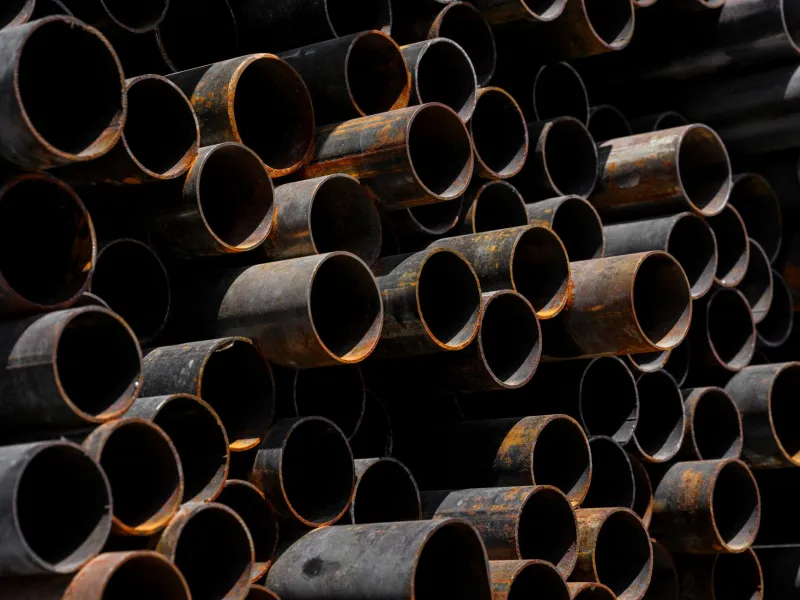
A steel plate that has just been blasted is not merely clean; it is chemically hungry. Mill scale and existing oxide have been removed, the surface profile is now a dense forest of microscopic peaks, and the underlying metal is entirely exposed to whatever the atmosphere chooses to do next. On a damp site in the UK — a February morning in the Midlands, a coastal refurbishment in Pembrokeshire, an unheated industrial unit in Motherwell — the atmosphere frequently chooses to do quite a lot, quite quickly.
Flash rusting is routinely described on site as if it were a minor cosmetic nuisance. It is better understood as a clock that starts the moment the nozzle passes. This article looks at how that clock behaves, how to slow it, and how to produce a record that stands up when somebody questions the substrate six months after handover.
Why a newly blasted surface corrodes so readily
Three factors combine. First, the removal of the protective oxide leaves bare iron and steel, which oxidises readily. Second, abrasive blasting produces a profile with a much greater true surface area than the flat plate it replaced, so there is simply more metal available to react. Third, blasting does not remove everything: soluble salts, particularly chlorides, can be driven into the profile or left in the pits of a pitted surface, and many salt residues are hygroscopic. They pull moisture out of the air even when the air does not feel particularly wet.
Relative humidity above roughly 60 per cent is generally enough for visible flash rusting to begin on a blast-clean surface, and in practice deterioration can be apparent within an hour or two where condensation forms. It does not require rain to fall on the steel. A cold plate in a warm, humid evening atmosphere will collect a microscopic film of water all by itself.
The dew point rule, applied rather than quoted
The familiar guidance is that the steel temperature should sit at least 3°C above the dew point before blasting or coating begins. Many coating manufacturers and specifications ask for 5°C on critical work. The number is not the difficulty; the discipline of measuring it is.
A single reading taken at the start of the shift proves nothing about the conditions four hours later. Late afternoon is the danger period on most UK sites: air temperature falls, relative humidity climbs, and the steel — which may have been sitting under a cold night sky or in a shaded yard — often lags behind the air. Spot checks should therefore be taken at the start of blasting, at intervals through the shift, at the moment blasting stops, and again before any primer is applied. Each reading should be logged with the instrument used and its calibration status.
A calibrated hygrometer with a contact probe for steel temperature is a modest investment against the cost of re-blasting an entire elevation. Readings taken from a nearby wall or a hand-held air probe alone are not a substitute for a surface temperature measurement.
Dehumidification, heating and the traps in both
Once an enclosure is sealed, dehumidification is usually the most effective means of holding the corrosion clock still. Desiccant or refrigeration units sized against the enclosure volume and the anticipated air leakage will keep relative humidity low enough that condensation cannot form, even when the ambient weather deteriorates.
The trap is heating without drying. Warming an enclosure that contains standing water, wet scaffolding boards or a damp floor raises the moisture-holding capacity of the air but does nothing about the water present, and once the heaters are switched off the dew point rises again and the steel is at greater risk than before. Draining and drying the space comes first; heat is a secondary measure.
Open-flue combustion heaters should be avoided inside enclosed blasting areas for several reasons, moisture and combustion products among them. Indirect-fired or electric units, with appropriate ventilation and gas monitoring, are the safer arrangement.
Temporary protection between shifts
The most reliable protection is sequencing: blast only what can be primed within the working window agreed with the coating manufacturer, and plan the working day so that large areas are not left bare overnight. Where the specification or programme makes that impossible, the following measures are worth building into the method statement.
- Hold-back strips left unblasted to allow the primer to overlap a sound edge.
- A holding primer or mist coat, agreed in writing with the coating manufacturer, applied to the profile rather than flooding it.
- Vapour-phase corrosion inhibitors in sealed enclosures, used in accordance with the supplier's instructions.
- Sheeting arranged so that it does not lie in direct contact with the blast-clean surface. Polythene laid flat against steel creates a condensing face; a supported tent or a breathable membrane performs differently.
- Dehumidifiers left running outside working hours, with runtime logged rather than assumed.
Where light flash rust does appear, the correct response is not a judgement call made in the yard. Grade it against the visual comparators in BS EN ISO 8501-1 and refer to the coating manufacturer's written position on acceptable levels for the specified primer. Any moderate or heavy discolouration, or any evidence of salt contamination, should be treated as a re-blast unless the manufacturer confirms otherwise in writing. A Bresle extraction test carried out in accordance with BS EN ISO 8502-6 and assessed under BS EN ISO 8502-9 gives a defensible chloride figure before and after blasting.
The site record that settles the argument later
Disputes about flash rust rarely arise during the job. They surface at handover, or later, when a coating fails and the question becomes who allowed the substrate to deteriorate. A simple one-page Blast and Protection Record, completed as work proceeds, will usually resolve the matter without argument. It should capture, at minimum:
- Date, time and area reference for the start and finish of blasting.
- Abrasive type and grade used.
- Ambient temperature, relative humidity, dew point and steel temperature, with the calculated margin.
- Dehumidification or heating equipment in use and its runtime.
- Protection method applied between blast and primer.
- Photographic references, including one wide shot and one close-up per area.
- Primer product, batch and time of application.
- Signature from the contractor's supervisor and, where possible, the client's representative.
The record is only worth having if it is completed contemporaneously. A form filled in from memory at the end of the week carries almost no evidential weight and, frankly, no operational value either.
A closing note
Freshly blasted steel in the UK is not protected by good intentions or by the forecast. It is protected by measurement, by a dry enclosure, by sequencing the work to the primer, and by a written record that shows the substrate was under control from the moment the nozzle opened. Contractors who routinely produce that paper find that conversations about flash rust become considerably shorter.