The Perimeter Is Part of the Job: Containment, Noise and Access on Urban Blast Sites
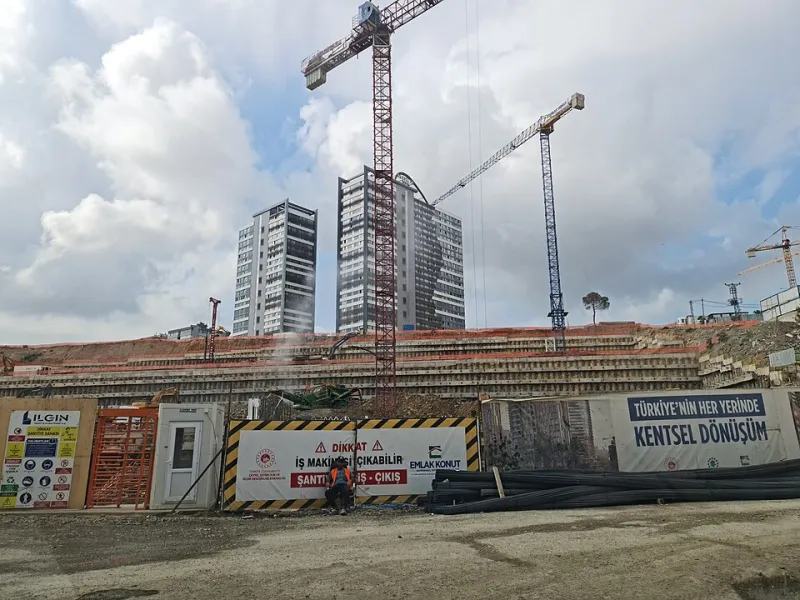
Photo: Sakaerka, CC BY 4.0, via Wikimedia Commons
Urban abrasive blasting is often described in terms of the nozzle: pressure, media, angle and speed. On a constrained city-centre site, however, the more demanding questions usually begin at the hoarding line. Dust that leaves the compound, noise that reaches a residential window, a blocked fire escape or a delivery that cannot reach the door can stop a job faster than a worn nozzle. The boundary is not an afterthought to the method statement; it is the brief.
Map the perimeter before the plant arrives
A useful boundary plan starts with a walk around the outside of the works, not the inside. Identify every sensitive receptor: homes, shops, offices, schools, healthcare premises, public transport stops and ventilation intakes. Note the prevailing wind and the way it changes around buildings. Check where doors, windows and fire escapes open. Look at the pedestrian route and the delivery route separately, because a barrier that protects pedestrians can easily obstruct a fire exit or a loading bay.
Mark these features on a simple drawing. Distinguish between the working zone, the contamination-control zone and the clean access route. The drawing should be understood by the blasting team, the client's facilities staff and any security or concierge team on site. If it needs a paragraph of explanation, it is probably too complicated for the hoarding.
Containment must match the substrate and the setting
On an open urban site, containment has two jobs: keeping spent abrasive and coating debris inside the working area, and preventing dust from migrating at roof level or through gaps at ground level. Rigid hoarding, flame-retardant mesh and reinforced sheeting all have a place, but they must be anchored for wind loading and sealed at the base. A tarpaulin draped over a frame is not a containment system unless it is fixed, overlapped and maintained.
Where the substrate is sensitive, such as listed stone or render, the containment method must also suit the blasting technique. Aggressive containment that traps moisture can create as many problems as it solves. The enclosure should allow controlled ventilation without turning the working zone into a wind tunnel. Sacrificial liners and replaceable screens are often more practical than trying to clean a single heavy-duty sheet throughout the project.
Dust suppression with water mist can be effective, but only where the substrate and waste route allow it. Wet blasting or water-assisted methods may reduce airborne dust, yet they create slurry that must be contained and disposed of lawfully. The containment plan and the waste plan should be written together.
Dust control is a source-control problem first
Visible dust at the boundary is a failure of control, not a cleaning problem. The first step is a proper COSHH assessment covering the substrate, the coating and the abrasive. Older structures may contain lead paint, and many masonry substrates contain crystalline silica. The assessment should determine the extraction, respiratory protective equipment and monitoring regime.
Local exhaust ventilation and well-designed enclosures reduce dust at source. Air monitoring at the boundary can confirm whether the controls are working, but it should not replace observation. A daily check of the screens, seals and extraction ducts is more useful than a single set of readings taken on a quiet day. If dust is visible beyond the containment, stop and correct the cause before work continues.
Noise is the other exported nuisance
For the workforce, the Control of Noise at Work Regulations 2005 set the familiar action and limit values. For neighbours, the Environmental Protection Act 1990 provides the statutory nuisance framework, and BS 5228 gives practical guidance on construction and open-site noise. The two regimes point in the same direction: reduce noise at source, then use screening and distance, then manage timing.
Acoustic screens, silenced compressors and quieter nozzles all help, but their performance depends on where they are placed. A screen that leaves a gap at the top or side will do less than the manufacturer's brochure suggests. Compressors should be sited away from sensitive façades and, where practicable, enclosed or barricaded with acoustic panels.
Working hours deserve early agreement. Early-morning starts and weekend working may be acceptable to the client but unacceptable to the neighbours. A short conversation before mobilisation is cheaper than a complaint afterwards. Keep a boundary noise log and record any changes to the programme.
Access, escape and the public realm
Blasting sites are temporary workplaces, but the routes around them are often permanent public routes. Maintain pedestrian access where possible, and provide a safe diversion where it is not. Barriers should be stable and visible. Signage should be clear at every approach, not only at the main gate.
Inside the boundary, keep fire escapes clear. This sounds obvious, but containment screens, media bags and hose runs have a habit of creeping into circulation space. Agree a marshalling area for spent media and coating debris that does not block an exit. Confirm the emergency plan with the building manager, including how a casualty would be recovered from inside an enclosure. Escape routes should be walkable without stepping over hoses or ducking under screens.
Neighbour notification and complaint handling
A letter drop or email before work starts is not a courtesy; it is a control measure. Explain the dates, working hours, likely noise and dust, and give a named contact and telephone number. Where the client has a facilities team, agree the wording so that tenants receive a consistent message.
Log every complaint, however minor. Record the time, the location, the activity underway and the action taken. A complaint log is useful evidence if a regulator or client asks what happened, but it is more useful as a live management tool. Patterns in complaints often reveal a gap in the containment or a poorly timed activity.
A one-page boundary checklist
The following items are deliberately short enough to fit on a single sheet and be signed off at the start of each shift:
- Perimeter drawing issued and understood by the blasting team.
- Sensitive receptors identified, including windows, vents and fire escapes.
- Containment screens anchored, overlapped and sealed at ground level.
- Extraction and dust-suppression equipment checked and running.
- Boundary dust observation recorded, with action taken if visible dust is present.
- Noise controls in place; compressors sited away from façades.
- Working hours confirmed with client and neighbours notified.
- Pedestrian and vehicle routes separated; barriers and signage in place.
- Fire escapes and emergency exits clear.
- Spent media and debris stored away from circulation routes.
- Contact number for complaints displayed and monitored.
- Weather forecast reviewed; wind direction noted.
- Shift handover includes boundary conditions and any complaints.
The checklist is not a substitute for a method statement or a risk assessment. It is a discipline that keeps the boundary visible when attention naturally turns to the nozzle. On an urban site, that discipline is part of the work.