Grain, Grit and Caution: Low-Pressure Blasting on Listed Stone, Brick and Render
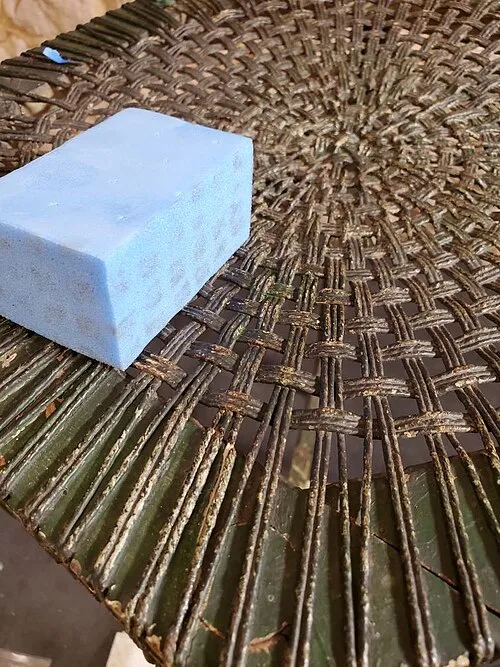
Photo: Nicola Shreeve, employed by National Trust, CC BY 4.0, via Wikimedia Commons
Speculative cleaning is the most common way to damage a listed building. A well-intentioned attempt to lift decades of soot from a limestone elevation can remove the very surface the architect wants to keep, and the loss is irreversible. For contractors working on historic fabric in the UK, the technical question — what pressure, what medium, what dwell — is always secondary to a prior one: how little intervention will achieve the agreed result?
Understand the fabric before the nozzle opens
The starting point is identification. Soft limestone such as Bath or Portland behaves nothing like a hard gritstone; handmade brick with a fired skin behaves nothing like a modern engineering brick; lime render behaves nothing like cement stucco. Tooling marks on dressed stone, tooled margins, diagonal tooling and mason's marks are part of the significance of the building and are removed by a single over-enthusiastic pass.
A condition survey should record the substrate, the soiling type — carbonaceous, biological, gypsum crust, paint or limewash — and any existing decay. Crusts and salts are treated differently from general grime, and what looks like dirt on a sheltered elevation is frequently a sound sacrificial layer doing useful work.
Statutory position needs settling early. Listed building consent, scheduled monument consent, and for churches the ecclesiastical exemption and faculty jurisdiction all change who signs off the method. Where the building is in a conservation area, the local authority's conservation officer will expect to see a methodology before a trial rather than after.
The trial panel is the contract
Nothing on a heritage elevation should proceed without an agreed trial. A panel of roughly one to two square metres, sited where it is least conspicuous but still representative, allows methods to be compared side by side on the actual substrate. It is normal to run two or three options: fine dry abrasive at reduced pressure, a wet or slurry method, and a non-abrasive alternative such as a poultice or steam.
The panel should be photographed under raking light before and after, with the camera position and lighting angle recorded so the same view can be repeated. The conservation officer, the client and the contractor should inspect it together, and the accepted panel should be left in situ as the physical benchmark for the rest of the works. Where the panel is later removed, a retained reference area elsewhere on the elevation serves the same purpose.
Selecting medium and pressure
On historic masonry the medium should be fine, angular and friable enough to cut soiling without abrading the substrate. Fine garnet, olivine, glass bead and calcium carbonate or dolomite-based media are all used in conservation work, chosen against the hardness of the stone rather than against speed of cleaning. Chilled iron and coarse angular slags, appropriate on structural steel, have no place on a fourteenth-century limestone.
Pressure at the nozzle is typically held below one bar, often considerably below, with the nozzle kept moving and held well back from the face. Lower pressure with a fine medium removes soiling layer by layer; higher pressure removes the surface along with it. Wet suppression reduces dust and heat but requires care around porous stone and any iron fixings; saturated fabric can mobilise soluble salts and drive them deeper.
For brick, the fired skin is the whole game. It is thin, it is what gives the material its colour and weathering resistance, and once it is gone the brick is permanently more absorbent. Blasting historic brick is rarely appropriate, and where cleaning is needed at all, poultices and low-pressure fine media under close supervision are the usual routes.
Reading the substrate while you work
The operative at the nozzle is the last line of defence, and needs to know what failure looks like: rounding of arrises and sharp edges, loss of tooling marks, exposed aggregate or fossil fragments standing proud, a sudden change in colour depth on brick, or a render skin turning from matt to polished. Any of these is a stop-and-check signal, not something to work through before the supervisor arrives.
Containment in sensitive locations
Heritage sites are rarely empty. Scaffold sheeting with negative pressure and HEPA-filtered extraction is the baseline where dust is generated, particularly on silica-bearing sandstone and on any substrate with lead paint residues. Monitoring for respirable dust and for airborne lead should match the COSHH assessment rather than a generic template.
Fabric protection extends well beyond the working face. Stained glass, leaded lights, lead roofing and rainwater goods, carved monuments, ironwork and painted ceilings all need physical protection and, where relevant, recording before works start. Trees within the site may be subject to preservation orders and root protection areas; churchyards frequently support bat roosts, which are legally protected and require an ecological assessment before scaffolding goes up. Public rights of way, school runs and shopfronts demand a traffic and pedestrian management plan that the local authority has actually seen.
Documenting a sympathetic finish
The handover pack is what turns a good job into a defensible one. It should contain the method statement and COSHH assessments, the trial panel record with its photographs and agreed acceptance criteria, a photographic log from fixed stations under consistent raking light, moisture and soluble salt readings where relevant, the media specification and batch records, and signed inspection sheets countersigned by the conservation officer at each stage.
Add to that a short maintenance note for the client: how the cleaned surface should be expected to weather, when lime mortar repairs or a sheltercoat may be appropriate, and who to call if salts reappear. Conservation bodies respond well to contractors who understand that a cleaned elevation is the beginning of a maintenance cycle rather than the end of a project.
The commercial case for restraint
A slower, finer, better-documented approach costs more per square metre and takes longer. It also avoids the single most expensive outcome available on a listed building: irreversible loss of historic fabric, followed by an enforcement conversation and a remedial specification written by somebody else. Contractors who can demonstrate control of the process tend to find that the next commission arrives without a competitive tender at all.