The Evidence Behind the Visor: Verifying Blasting Crew Competence Before Mobilisation
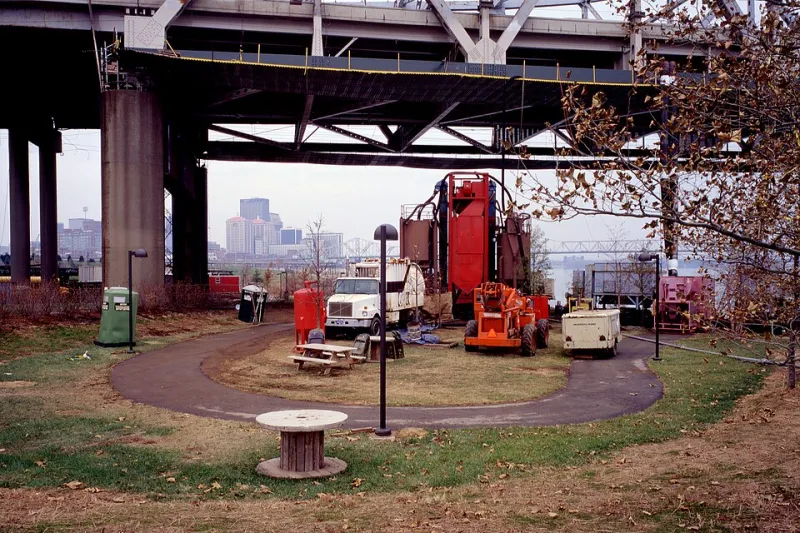
Photo: William Alden from Louisville, Kentucky, USA, CC BY-SA 2.0, via Wikimedia Commons
A principal contractor can receive a tidy bundle of certificates, cards and induction slips and still be no closer to knowing whether the crew is competent. Abrasive blasting is not a single task. It combines equipment operation, respiratory protection, waste handling, communication and supervisory control. A card may show that someone attended a course. It does not, by itself, show that they can run a blast pot safely on this site, with this media, under this supervisor.
The answer is not more paperwork. It is a clearer link between the evidence held and the work actually being authorised. For UK projects, that link is best made through a short verification matrix that sits in front of the full competence file and forces the right questions before mobilisation.
A file is not a framework
A competence file should answer five questions for every person on the blast crew: who they are, what role they are expected to perform, what evidence supports that role, when that evidence expires, and who has authorised them for the specific task. If the file cannot answer those questions quickly, it is an archive rather than a control.
The distinction matters most where subcontractors are involved. Records may be held by a labour agency, a specialist blasting firm and the principal contractor in different formats. A matrix does not replace those records, but it provides a single index that a facilities manager or site manager can audit without reading every certificate in full.
The evidence streams that matter
Role-specific training and assessment
Training should be mapped to the role, not treated as a generic blasting ticket. Nozzle operators, pot tenders, blast room operators and supervisors need different knowledge and different levels of authority. A certificate for abrasive blasting may be relevant, but its scope should be checked: does it cover the equipment in use, the media being applied and the controls expected on site?
In-house training can be valid where it is structured, delivered by a competent person, assessed and recorded. A signed attendance sheet is weak evidence. A training record that states the content, the equipment covered, the assessment method and the trainer's name is stronger. Where an external awarding body is used, confirming the certificate with the body is sensible, particularly for new subcontractors.
Respiratory protection and face-fit testing
Blasting creates airborne dust, including respirable crystalline silica where relevant. Tight-fitting respiratory protective equipment depends on a good face seal. Face-fit testing should be recorded by mask make, model and size, with the test method, date and tester identified. A fit test for one mask does not cover a different model. Daily fit checks remain necessary; the test is not a permanent guarantee.
Facial hair, weight change and new PPE can all affect fit. The competence file should show that the person is clean-shaven where required and that the mask issued matches the fit test record. Medical surveillance, where required for dust, noise or vibration exposure, should be recorded as a status and review date. Clinical details should not be placed in the matrix; confidentiality still applies.
Site induction and task briefing
A general site induction is necessary but not sufficient. Blast crews need a task-specific briefing covering containment, waste routes, emergency arrangements, communication methods, breathing-air supplies and the limits of the work area. The record should show the date, the person delivering the briefing and the scope covered. A signature against a generic induction form does not demonstrate that the operator understood the specific hazards of the blast enclosure.
Supervisory authorisation
Supervision is part of competence. A named supervisor should confirm that an individual is authorised for a defined task and equipment set. That sign-off should be dated and specific. A statement that the crew is competent is less useful than a record showing that a named operator is authorised for nozzle work on a particular pot and media, under a named supervisor.
Equipment-specific familiarisation
Blast pots, remote controls, deadman systems and breathing-air arrangements vary. Familiarisation records should show which equipment the person has used and who confirmed that familiarisation. This is not a substitute for formal training where training is required, but it closes the gap between a general qualification and the actual plant on site.
The one-page verification matrix
A useful matrix is deliberately short. It should sit at the front of the file and act as an index, not a replacement for certificates. A workable layout is:
| Name and ID | Role | Training evidence and scope | RPE fit test: mask, date, next review | Medical surveillance status | Site induction | Equipment authorisation | Supervisor sign-off | Review date |
|---|---|---|---|---|---|---|---|---|
| A. Example | Nozzle operator | Blasting course, assessed, covers garnet and chilled iron | Mask A, size M, tested, next date recorded | Cleared or review due | Date and briefed by | Pot and remote control | Named supervisor, dated | Date |
The matrix should be completed from the records, not from verbal assurance. Where an entry cannot be supported, it should be marked as missing rather than left blank. A missing entry is a finding; a blank box is easy to overlook.
Auditing the entries
Before mobilisation, sample the file against the matrix. Confirm identity and certificate authenticity where possible. Check that the training scope matches the intended task. Confirm that the face-fit record matches the mask actually issued. Check that medical surveillance status is current without requesting clinical information. Confirm that the supervisor's sign-off is dated and task-specific.
It is also worth asking operators to explain the controls in their own words during induction. This is not a formal reassessment, but it can reveal whether the paperwork reflects understanding. Ask about emergency shutdown, communication with the pot tender, RPE donning and the action to take if containment fails. A confident answer is not proof, but an inability to answer is a warning.
Red flags before mobilisation
Several patterns should prompt a closer look: certificates with no clear role mapping; one face-fit test used for several mask models; expired fit tests or medical reviews; unnamed supervisors; records held only off site; and new starters added without an update to the matrix. Claims of long experience should be supported by evidence, not accepted as a substitute for it.
Where CDM 2015 applies, the principal contractor will have duties around construction phase planning and coordination. A competence matrix supports those duties, but it does not discharge them on its own. It is a practical check that the right evidence exists and has been reviewed.
Keeping the file live
The matrix should be reviewed at mobilisation and updated when something changes: new equipment, new media, a different site, a change of mask, a medical review, an incident or a long gap between projects. A file that is accurate on day one and stale by week three is not a control system.
Tickets have their place. They show that training has taken place. They do not blast, and they do not supervise. The verification matrix is there to make sure the person behind the visor has the evidence, the authorisation and the oversight to do the job properly.